Cart is empty
15%
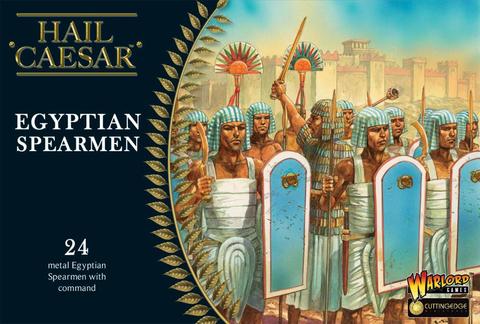
The Egyptian pharaohs led their armies through Canaan and into Syria in a succession of wars throughout the age of the New Kingdom. Infantry formed the backbone of these forces, comprising archers and close fighters armed with spears, swords, and sometimes with heavy mace-like weapons. The Egyptian spear was not especially long, and was primarily a throwing weapon whose user would follow up with the deadly khopesh sickle-sword.
From the reign of Akhenaten (1379-1362BC) if not earlier, the Egyptian infantryman benefited from the addition of distinctive banded armour made from stiffened or reinforced fabric, images of warriors so equipped were discovered in the tomb of Tutankhamun.
The banded headcloth, so commonly associated with Egyptian infantry, is a typical feature of troops from the later Nineteenth dynasty, reflecting the appearance of the armies of such mighty warriors as Ramesses II and later pharaohs. It may conceal a helmet or could be a padded or plaited headdress – we don’t know for sure.
These troops carry a larger shield than that of earlier close-fighting infantry, more suitable for fighting in dense formations. Shields are shown painted in a solid colour such as red or blue, with a white border decorated with black, blue and red lines. Shields were often slung on the back, even in combat, and were used to form a palisade around the army’s encampment.
From the reign of Akhenaten (1379-1362BC) if not earlier, the Egyptian infantryman benefited from the addition of distinctive banded armour made from stiffened or reinforced fabric, images of warriors so equipped were discovered in the tomb of Tutankhamun.
The banded headcloth, so commonly associated with Egyptian infantry, is a typical feature of troops from the later Nineteenth dynasty, reflecting the appearance of the armies of such mighty warriors as Ramesses II and later pharaohs. It may conceal a helmet or could be a padded or plaited headdress – we don’t know for sure.
These troops carry a larger shield than that of earlier close-fighting infantry, more suitable for fighting in dense formations. Shields are shown painted in a solid colour such as red or blue, with a white border decorated with black, blue and red lines. Shields were often slung on the back, even in combat, and were used to form a palisade around the army’s encampment.
Producer:

 21 0823 1072